Where Do Bridal Seamstresses Fit in the Wedding Industry?
I’ve been thinking about this for quite a while. In fact, I’ve started writing about it several times, only to put it to one side.
But there’s a question I keep coming back to.
Where exactly do bridal seamstresses fit in the wedding industry?
We’re surrounded by an incredible industry full of talented designers, bridal boutiques, photographers, cake designers, florists, planners and many other professionals whose work is celebrated in magazines, at industry events and across social media.
And rightly so.
And bridal seamstresses are very much part of that industry. We always have been.
There’s More to a Wedding Dress Than the Designer
We all love seeing beautiful wedding dresses, whether they’re featured in magazines, shared by bridal boutiques or photographed at real weddings.
But what happens to those dresses between leaving the boutique and appearing in those beautiful photographs?
Because in most cases, quite a lot!
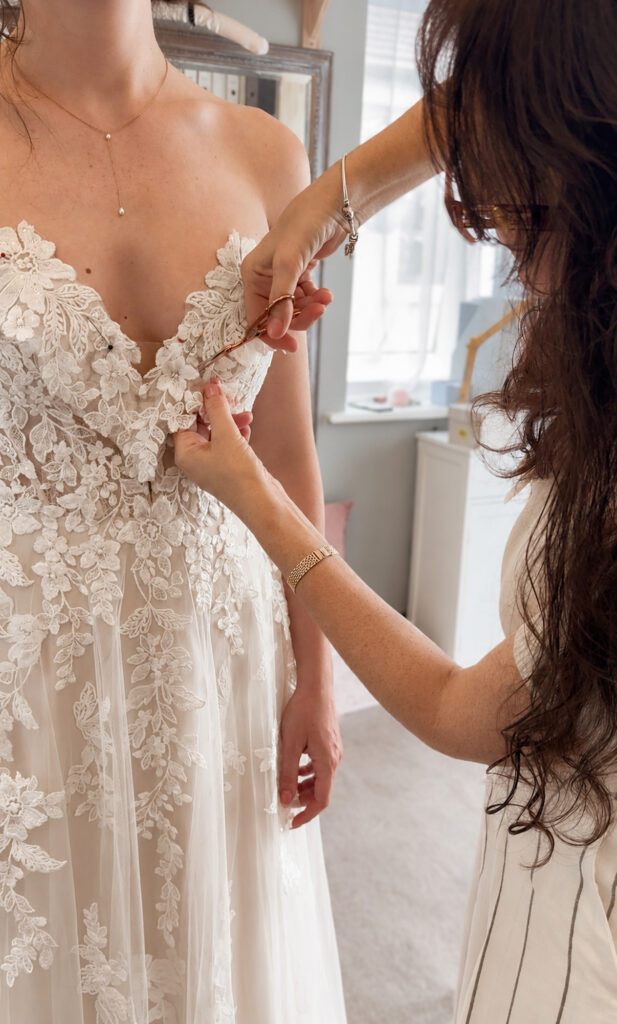
Most wedding dresses aren’t made to measure. They’re ordered in standard sizes, and it’s the alterations process that makes them fit the individual bride.
Even what might seem like a relatively small adjustment can involve hours of work. And when more extensive alterations are needed, that can mean carefully taking apart a beautifully constructed gown, making changes and putting everything back together again.
And that’s the irony of good alterations.
If we’ve done our job properly, you probably won’t notice we’ve done anything at all.
But You Didn’t Actually Make It?
Here’s something I’ve always found interesting.
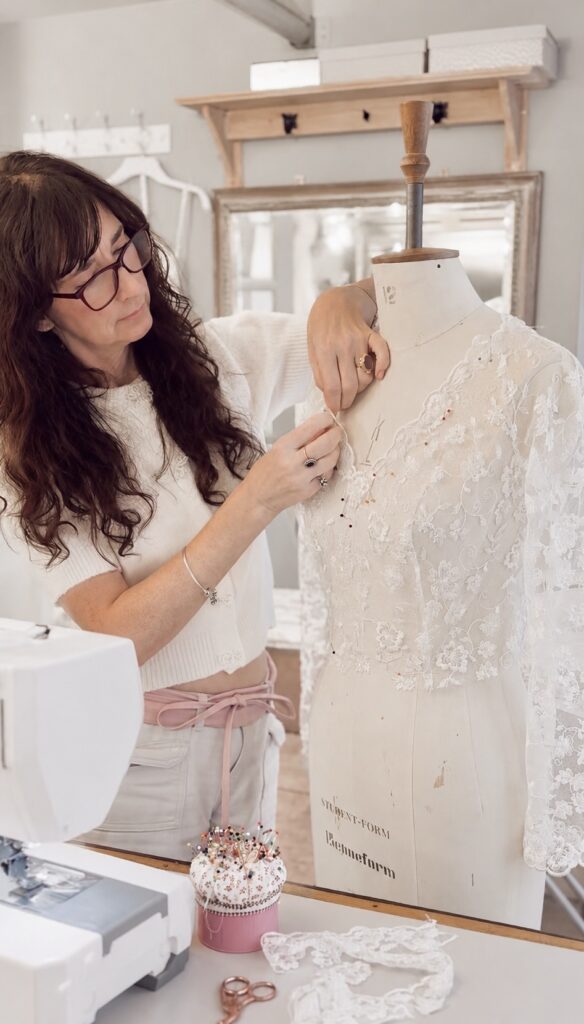
I started making wedding dresses back in the 1990s, but somewhere along the way I discovered that I actually preferred altering and redesigning them.
I loved the challenge of working with an existing gown, understanding how it was constructed and finding ways to change it.
But there’s a perception surrounding alterations that I’ve come across more than once.
Someone might admire a wedding dress and ask, “Did you make that?”
And when I explain that I’ve altered it or redesigned it, the response can sometimes be a slightly disappointed, “Oh, okay.”
As though the work suddenly becomes less impressive because I didn’t make the original dress!
Making a wedding dress from scratch takes enormous skill. But so does taking apart a gown someone else has designed and constructed, making changes and ensuring the finished result looks as though it was always intended to be that way.
Both require skill, experience and an understanding of how a gown is constructed. The difference is how that knowledge is applied.
So why is altering or redesigning a wedding dress sometimes seen as less of an achievement than making one?
So Where Are the Seamstresses?
And here’s something else I’ve noticed.
Bridal seamstresses are often recommended by boutiques, designers and other wedding professionals. Our work is valued, and those relationships are an important part of what we do.
But how visible are we as a profession within the wider wedding industry?
If you look through some of the bigger wedding supplier directories, you’ll often find bridal seamstresses tucked away under bridalwear or bridal shops. We’re there, but we’re not always easy to find as a profession in our own right.
The wedding industry does a wonderful job of celebrating its creative professionals.
We see beautiful editorial features, supplier collaborations, industry awards and events showcasing the talent involved in bringing a wedding together.
But bridal seamstresses don’t always seem to feature quite as prominently.
Which is interesting, considering how many wedding dresses pass through our hands before they’re worn.
This isn’t about being credited in every wedding photograph.
It’s about being included alongside other wedding professionals, whether that’s at industry events, through collaborations or simply being recognised as part of the wider wedding community.
Because that’s exactly what we are.
Not instead of designers or boutiques.
Alongside them.
Things Are Changing
And encouragingly, I think they are.
The Wedding Industry Awards (TWIA) has recently introduced a category recognising bridal seamstresses and tailors, which I think is a fantastic step forward.
And it’s encouraging to see other wedding awards recognising our profession in it’s own right too.
Not because everyone needs an award to prove they’re good at what they do, but because it recognises bridal seamstresses as specialist wedding professionals.
There are incredibly talented seamstresses working across the country, often independently in small studios and workrooms.
But We Have a Part to Play Too
And here’s another thought.
If we’d like bridal seamstresses to have a bigger voice within the wedding industry, perhaps we need to be more involved in those conversations ourselves.
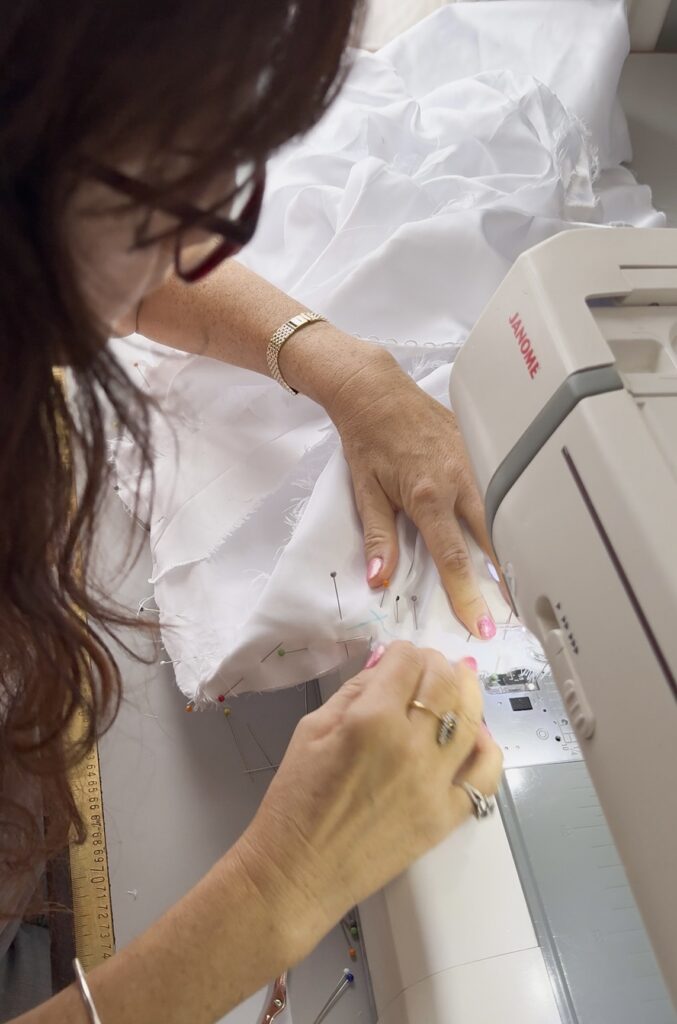
Many of us spend our working days tucked away in studios, concentrating on fittings, alterations and the next wedding deadline.
That’s simply the nature of the job.
But there are opportunities to connect with other wedding professionals, share our expertise and contribute to industry initiatives.
Not everyone wants to enter awards, attend events or be particularly visible on social media. And that’s absolutely fine.
But as a profession, I think there’s something to be gained from becoming more involved in the industry we’re already part of.
After all, if we want people to understand what we do, we have to be willing to talk about it.
Looking Ahead
Bridal fashion continues to evolve.
We’re seeing more brides personalising their gowns, choosing vintage dresses and redesigning family heirlooms.
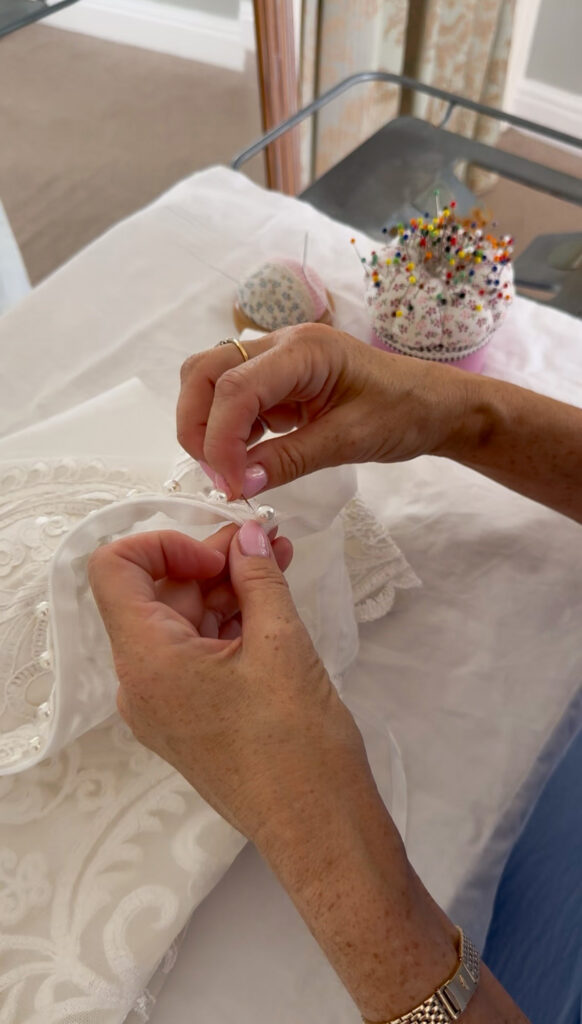
And with that comes even more opportunity for the specialist skills and creativity involved in bridal alterations and redesigns.
I’d love to see bridal seamstresses become more involved in the wider conversations surrounding bridal fashion and the wedding industry.
Not because we need special recognition, but because our profession has so much to contribute.
And with the industry beginning to acknowledge that, perhaps we’re already moving in the right direction.
Bridal seamstresses have always been part of the wedding industry. Perhaps it’s time we became a bigger part of the conversation.
